Japanese Reiki Therapy
  • Home
  • Services
  • Animal Healing
  • Location
  • Contact
  • Reiki Q & A
  • How to optimize Reiki
  • History of Reiki
  • Testimonials
  • Home
  • Services
  • Animal Healing
  • Location
  • Contact
  • Reiki Q & A
  • How to optimize Reiki
  • History of Reiki
  • Testimonials
Search by typing & pressing enter

YOUR CART

History of Reiki 

Picture

​Reiki is an art of hand healing developed by Mr. Mikao Usui (1865-1926) in 1922 in Japan. His traditional methods were passed through several grandmasters of Reiki. Reiki Teachers are trained through an initiation process where Masters pass on the mindset, wisdom, and skills to their students.

Since the 1980s, Reiki has rapidly grown in popularity in North America.  Along the way, some changes were introduced and Western Reiki practitioners began to combine Reiki with other healing practices such as chakra balancing, aura healing, crystal healing, angel guidance, aromatherapy, et cetera.  As a result, Reiki has propagated into many variations known as “The Western Reiki” which contain non-Japanese concepts and are not part of traditional Reiki teachings.

However, “Jikiden Reiki” is still the traditional art form of Reiki therapy that is passed on faithfully from teachers to students without alterations. In this process, nothing is added or amended from the original form.
 In other words, “Jikiden Reiki” does not have any non-Japanese concepts
and is very respectful of the original teachings.
​
In whatever form it takes, Reiki continues to be a highly effective technique for promoting the relaxation necessary for the mind & body to engage its internal self-healing resources.


​The Lineage of Traditional Reiki practitioners

​Reiki was established as a natural remedy by Mr. Mikao Usui in 1922. From then on, Reiki has been faithfully inherited from generation to generation in Japan.

Picture
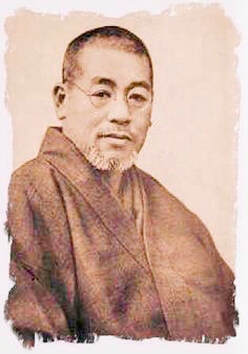
Mr. Mikao Usui the founder of Reiki (1865-1926)
Picture
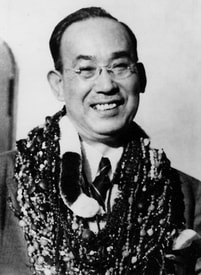
Dr. Chujiro Hayashi (1879-1940) The first generation practitioner of Traditional Reiki.
Picture
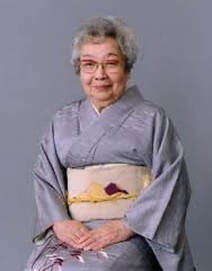
Mrs.Chiyoko Yamaguchi (1921-2003) The second generation practitioner
Picture
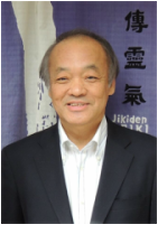
Mr.Tadao Yamaguchi (1952 - Current) The son of Mrs. Yamaguchi The third generation practitioner
Picture
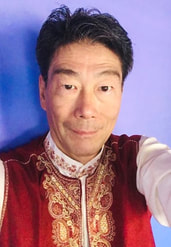
Sean Shin-Ji Yoshikawa ( 1965- Current) The fourth generation practitioner of Traditional Reiki
Picture

PictureMrs. Hawayo Takata

​Western Reiki and Jikiden Reiki - What is the difference?
Submitted by Carolyn Lunn - website: http://rideaureiki.com

​All forms of Reiki practiced today originated in 1922 in Japan with the founder, Mr. Mikao Usui. This simple healing practice migrated to the West in the 1930s via Hawayo Takata, a first-generation Japanese-American, and Dr. Chujiro Hayashi one of Sensei; Usui’s original students. Mrs. Takata, who was recognized by Dr. Hayashi as a Reiki Master in 1938, continued to practice and teach in Hawaii, on the U.S. mainland, and in British Columbia until her death in 1980.

​​Within 15 years of Mrs. Takata’s death, Reiki had spread throughout the rest of the world via the 22 Masters she had trained. With this rapid growth, changes were introduced and some students began to combine Reiki with other healing practices. Terms such as chakras, aura healing, crystal healing, angel guides, etc. used by some practitioners are non-Japanese concepts and were not part of the original teachings.
​
Meanwhile, students of Usui and Hayashi continued to practice and teach Reiki in Japan. Western Reiki practitioners who went in search of Reiki’s traditional Japanese roots in the 1990s met Chiyoko Yamaguchi, an elderly lady who had been practicing Reiki healing techniques since she was first trained by Dr. Hayashi in 1938. On learning how much Western Reiki had changed in its journey around the world, she and her son, Tadao Yamaguchi, decided to pass on what they had learned, coining the name Jikiden Reiki. The term “jikiden” is a Japanese word that denotes a traditional art form that is passed on carefully from teacher to student without alteration. 

Rather than using fixed hand positions, Jikiden Reiki training involves learning to use the hands to sensitive areas in the body where there are accumulations of toxins. Placement of the hands-on or just above these areas is used to break down and eliminate these toxins more effectively. Once toxins are eliminated, the body may more easily move into a place of balance and health. Specific techniques may also be used to release and eliminate “toxic” emotions so that may have a negative impact on health.

Western Reiki practitioners are usually taught the Five Precepts “Gokai” (Usui’s original precepts to promote a happy and healthy life) in the first level. Rather than being an “aside”, the Gokai are an integral part of Jikiden Reiki practice. Reciting the Five Precepts in Japanese  morning and evening is believed to be an important part of developing compassion. By working on ourselves, we are better able to help others.

Thus, Jikiden Reiki is Usui Reiki. It is the Reiki directly from its birthplace, Japan. Nothing is added or amended from its original teaching from Dr. Chujiro Hayashi, one of the 20 students of Mr. Usui, the founder of Reiki. Western Reiki practice is neither better nor worse than Jikiden Reiki; it is simply a matter of personal preference. I love the explanation provided by Mari Okazaki in her blog “Tuna Roll or California Roll”. She compares Western Reiki to California Rolls which have been created to suit the Western taste, based on the Japanese sushi recipe or to Modern and Contemporary Ballet as opposed to Classical Ballet.
​ 
In whatever form it takes, Reiki continues to be a highly effective technique for promoting the relaxation necessary for the body to engage its internal self-healing resources.
Location

Contact Us

Submit